
CCS2 vs CHAdeMO: Which EV Charging Standard Is Right for You?
What Is CCS2?
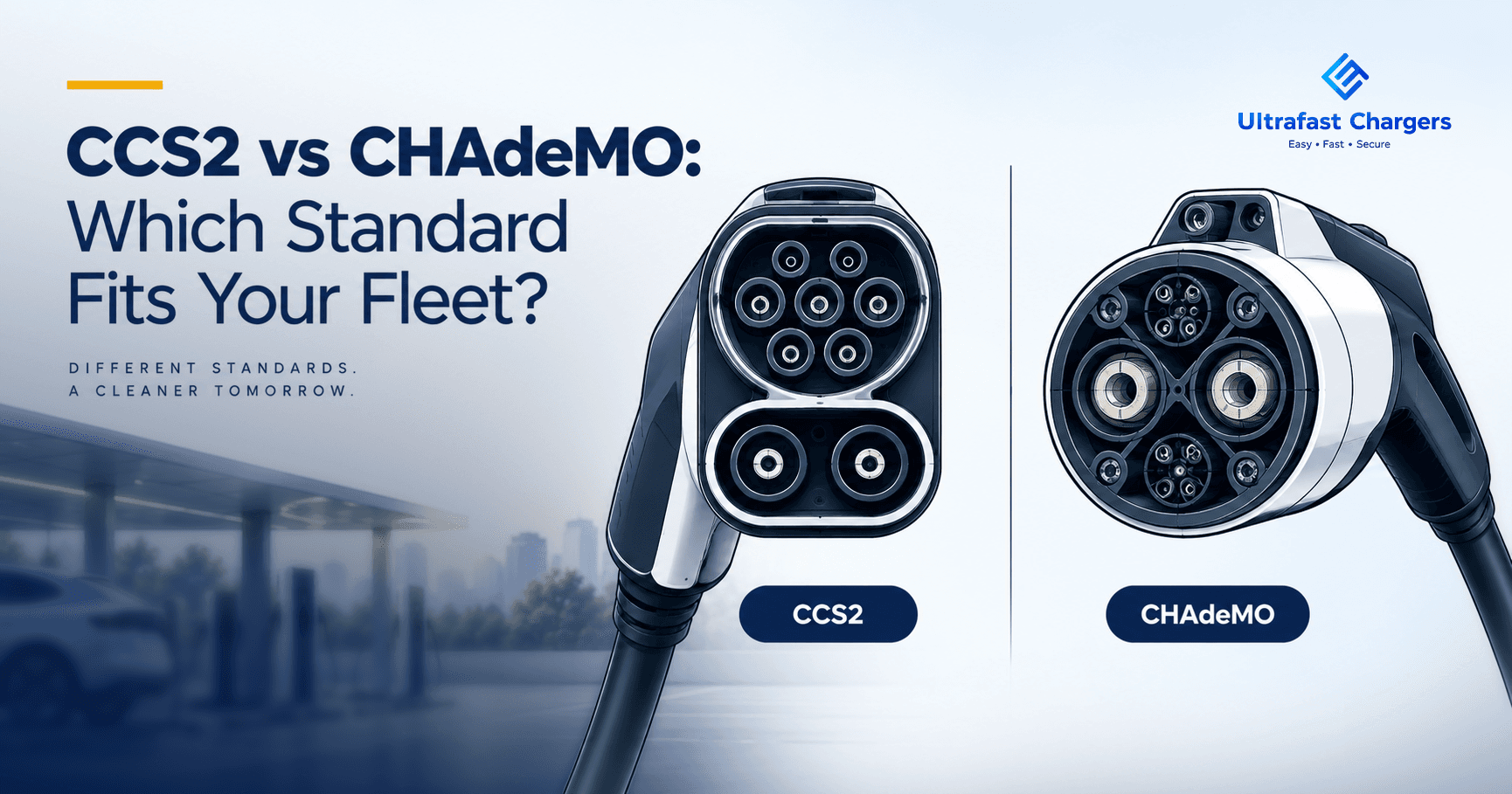
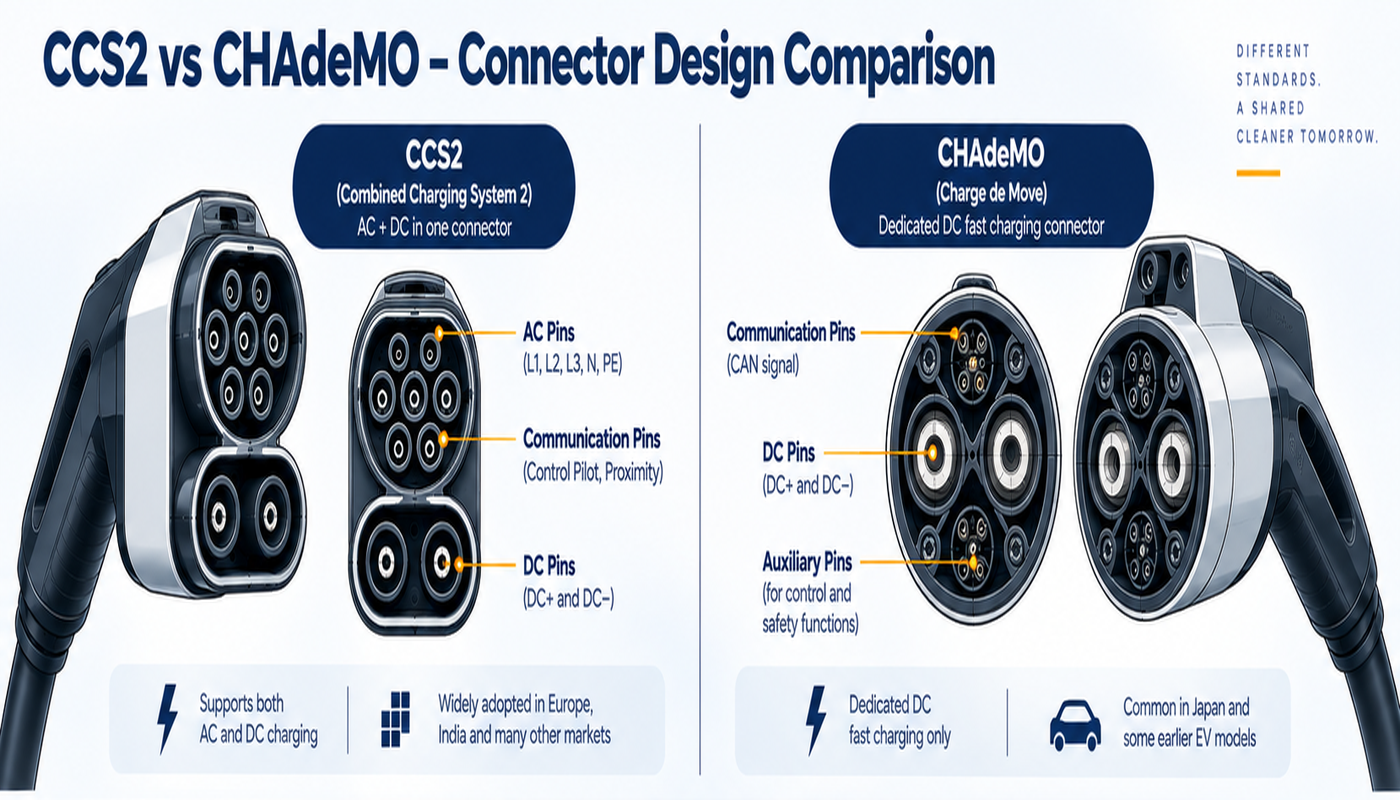
CCS2 (Combined Charging System, Type 2 variant) is a DC fast charging connector standard that combines AC and DC charging into a single vehicle inlet — the upper part of the connector is a standard Type 2 AC connector, and two additional large DC pins are added below it for fast charging. CCS was jointly developed by SAE International and the European vehicle manufacturers' association, and the "2" variant (built on the Type 2 AC connector rather than the North American Type 1) is the version used across Europe, India, and most markets outside Japan and North America's legacy CHAdeMO/NACS ecosystems.
What Is CHAdeMO?
CHAdeMO is a DC fast charging standard developed in Japan, using a dedicated round connector separate from the vehicle's AC charging inlet, and governed by the CHAdeMO Association. It was among the earliest DC fast charging standards to reach the market and remains most associated with Japanese-brand EVs, most notably the Nissan Leaf. CHAdeMO also has a long-standing technical advantage in bidirectional (vehicle-to-grid) charging, since its protocol was designed with V2G/V2H capability earlier than CCS.
Connector Design Differences
| CCS2 | CHAdeMO | |
|---|---|---|
| Inlet design | Combined — Type 2 AC connector plus two DC pins in one inlet | Separate, dedicated round DC-only connector |
| Vehicle inlets needed | One combined inlet for both AC and DC | Two separate inlets (AC Type 2/1 + CHAdeMO) on vehicles supporting both |
| Origin | SAE International / European industry (CCS) | Japan, via the CHAdeMO Association |
Charging Power and Speed Comparison
Both standards have evolved their maximum power ratings over time. CCS2 deployments in commercial use today commonly range up into the hundreds of kilowatts (UFCL's own CCS2-based product range, for example, spans from 22 kW up to 400 kW). CHAdeMO's newer revisions have also targeted high power levels, though CHAdeMO's real-world commercial deployment at very high power is far less common outside Japan. In practice, for most India-market buyers, the relevant comparison is less about theoretical maximum power and more about which standard the vehicles actually on the road can use.
Communication Protocol Differences
CCS2 uses power-line communication over its control pilot signal to carry ISO 15118 (and the earlier DIN 70121) vehicle-charger communication — this is the same data link that enables Plug & Charge on CCS2-based chargers (see our ISO 15118 and Plug & Charge guide). CHAdeMO uses a CAN bus-based communication protocol native to its own connector design, developed independently of the CCS/ISO 15118 ecosystem.
Regional Adoption
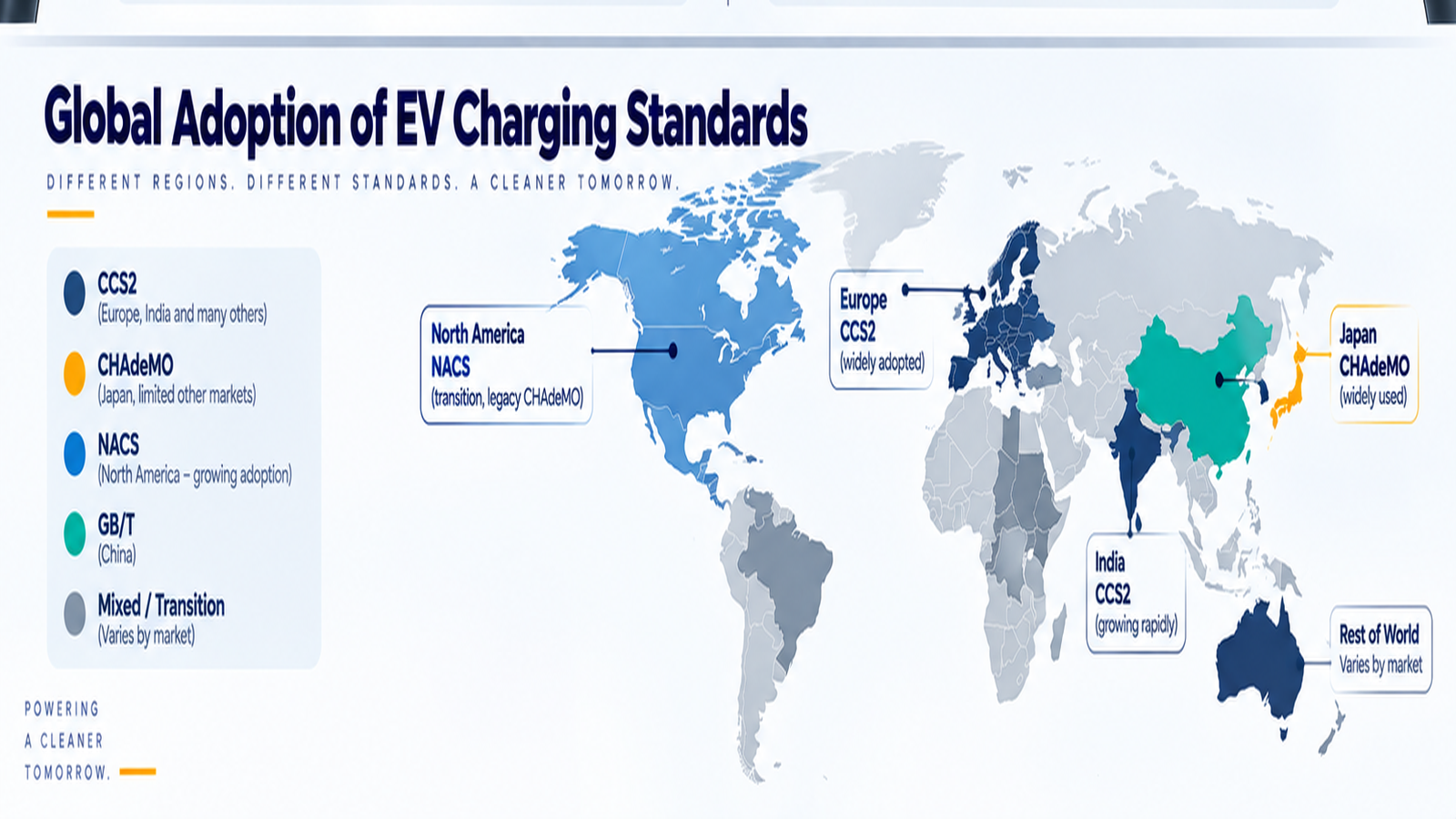
- Europe: CCS2 is the mandated standard for public DC fast charging under EU regulation.
- North America: Historically CCS1 (the Type 1-based CCS variant, distinct from CCS2), though the market is now transitioning toward Tesla's NACS standard; CHAdeMO presence is limited to legacy vehicles, with no new CHAdeMO-equipped models introduced by mainstream automakers in recent years.
- Japan: CHAdeMO remains the domestic standard and is well-supported by Japanese charging infrastructure.
- China: Uses its own GB/T standard, separate from both CCS2 and CHAdeMO.
- India: CCS2 is the de facto DC fast charging standard. Most electric cars sold in India today use CCS2 for DC fast charging, and CHAdeMO adoption in India is limited, with most current EV models having moved away from it. Some China-manufactured EVs sold in India use GB/T connectors, which are separate from both CCS2 and CHAdeMO.
Vehicle Compatibility
Vehicle compatibility, not charger specification, ultimately determines which connector matters at a given site. In the Indian market specifically, checking the connector type used by the vehicle models a site expects to serve is the practical starting point — and as of 2026, that check points toward CCS2 for the overwhelming majority of new electric cars sold in India.
Bidirectional Charging (V2G) Considerations
CHAdeMO's protocol has historically had a head start on bidirectional (V2G/V2H) charging support, since it was designed with that capability earlier in its development. CCS-based bidirectional charging capability is developing through newer parts of the ISO 15118 standard (which extends into V2G signaling) and through OCPP 2.0.1's V2G-related messaging framework (see our OCPP 1.6J vs 2.0.1 guide) — meaning the gap between the two standards on this specific point is narrowing as the CCS/ISO 15118/OCPP 2.0.1 ecosystem matures, though CHAdeMO's V2G capability is currently more established in deployed hardware.
Infrastructure Implications for CPOs
For a CPO or fleet operator planning new infrastructure in India, connector choice is largely already decided by the market: CCS2 is the standard to build around for DC fast charging, given the overwhelming vehicle-side adoption. A dedicated CHAdeMO connector or dual-standard charger may still make sense for operators specifically serving a fleet or customer base that includes older CHAdeMO-equipped vehicles, but this is a narrowing use case in the Indian context.
Which Standard Is More Relevant, Depending on Your Situation
| Your Situation | More Relevant Standard |
|---|---|
| General public DC fast charging site in India | CCS2 — matches the overwhelming majority of vehicles on the road |
| Fleet composed entirely of modern CCS2-equipped EVs | CCS2 |
| Legacy fleet or customer base including older Japanese-brand EVs (e.g., early Nissan Leaf models) | Dual-standard charger (CCS2 + CHAdeMO) may be worth evaluating |
| Deployment specifically targeting near-term V2G/bidirectional use cases | Evaluate both — CHAdeMO's V2G ecosystem is more mature today, while CCS2/ISO 15118/OCPP 2.0.1 V2G capability is developing quickly |
Neither standard is universally "better" in the abstract — the right choice depends on the vehicle fleet and market a specific deployment is meant to serve, and in India, that answer points clearly toward CCS2 for the great majority of new deployments.
KEY TAKEAWAYS
- CCS2 combines AC and DC charging into a single connector; CHAdeMO uses a separate, dedicated DC connector.
- CCS2 is the dominant DC fast charging standard in Europe and India; CHAdeMO remains standard in Japan but is being phased out or is legacy-only in most other markets.
- CHAdeMO has historically led on V2G/bidirectional charging capability, though CCS2 (via ISO 15118 and OCPP 2.0.1) is closing that gap.
- In India, CCS2 is the practical default for new DC fast charging deployments, given overwhelming vehicle-side adoption.
- Neither standard is universally superior — the right choice depends on the specific vehicle fleet and market being served.
FAQS
Q1. Is CCS2 or CHAdeMO used in India? CCS2 is the dominant DC fast charging standard in India; CHAdeMO adoption is limited, and most current EV models sold in India have moved away from it.
Q2. What is the main design difference between CCS2 and CHAdeMO? CCS2 combines AC and DC charging into one connector inlet; CHAdeMO uses a completely separate, dedicated DC-only connector requiring a second inlet on the vehicle.
Q3. Is CHAdeMO being phased out? It's being phased out or reduced in most markets outside Japan, including limited new-vehicle adoption in North America and Europe, though it remains standard in the Japanese domestic market.
Q4. Which standard supports faster charging, CCS2 or CHAdeMO? Both standards have evolved to support high power levels; in practice, real-world commercial deployment at very high power is far more common on CCS2 globally, including in India.
Q5. Does CHAdeMO support bidirectional (V2G) charging better than CCS2? CHAdeMO has historically had a head start on V2G capability, but CCS2's V2G capability is developing through newer parts of ISO 15118 and OCPP 2.0.1's V2G-related messaging.
Q6. Should a new charging station in India install CHAdeMO connectors? For most new deployments, no — CCS2 matches the overwhelming majority of vehicles on Indian roads. A dual-standard charger may be worth considering only if serving a fleet or customer base that specifically includes older CHAdeMO-equipped vehicles.
Q7. What connector do Chinese EVs sold in India use? Some China-manufactured EVs sold in India use the GB/T standard, which is separate from both CCS2 and CHAdeMO.
Q8. Is CCS2 the same as CCS1? No — CCS1 is built on the North American Type 1 AC connector, while CCS2 is built on the Type 2 AC connector used in Europe and India. They are related but not interchangeable standards.
Q9. Which connector do UFCL chargers use? UFCL's DC fast charging product range uses CCS2, in line with the standard's dominance in the Indian market (see product specifications).
Q10. Is one standard universally "better"? No — the right standard depends on the vehicle fleet and market being served. In India, CCS2 is clearly the more relevant standard for new deployments today.
CTA
Specifying connector configuration for your next DC fast charging deployment? UFCL's CCS2-based DC fast chargers span 22 kW to 400 kW — contact UFCL's team to discuss the right configuration for your fleet or site.